The NIAGARA MOVEMENT
| In February 1905, W.E.B. Dubois, John Hope, Monroe Trotter, Frederick McGhee, C. E. Bentley and 27 others met secretly in the home of Mary B. Talbert, a prominant member of Buffalo's Michigan Street Baptist Church to adopt the resolutions which lead to the founding of the Niagara Movement. The Niagara Movement renounced Booker T. Washington's accommodation policies set forth in his famed "Atlanta Compromise" speech ten years earlier. The Niagara Movement's manifesto is, in the words of Du Bois, "We want full manhood suffrage and we want it now.... We are men! We want to be treated as men. And we shall win." They invited 59 well know African American businessmen to a meeting that summer in western New York. On July 11 thru 14, 1905 on the Canadian side of Niagara Falls, twenty-nine men met and formed a group they called the Niagara Movement. The name came because of the location and the "mighty current" of protest they wished to unleash. | 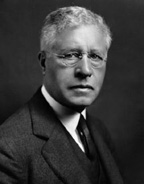 John Hope |
Du Bois was named general secretary and the group split into various committees. The founders agreed to divide the work at hand among state chapters. At the end of the first year, the organizations had only 170 members and were poorly funded. Nevertheless they pursued their activities, distributing pamphlets, lobbying against Jim Crow, and sending circulars and protest letters to President Theodore Roosevelt after the Brownsville Incident in 1906. In the summer of 1906 the Niagara Movement held their second conference at Harper's Ferry, West Virginia.
This movement will be a forerunner of the NAACP.
Despite the establishment of 30 branches and the achievement of a few scattered civil-rights victories at the local level, the group suffered from organizational weakness and lack of funds as well as a permanent headquarters or staff, and it never was able to attract mass support. After the Springfield (Ill.) Race Riot of 1908, Du Bois had invited Mary White Ovington, a settlement worker, and socialist to be the movement's first white member. Soon other white liberals joined with the nucleus of Niagara "militants" and with Du Bois, founded the NAACP the next year. The Niagara Movement disbanded in 1910, with the leadership of Du Bois forming the main continuity between the two organizations.
Founders of The Niagara Movement at Niagara Falls
Top row: H. A. Thompson, New York; Alonzo F. Herndon, Georgia; John Hope, Georgia; unidentified.
2nd row: Fred McGhee, Minnesota; Norris Bumstead Herndon [son of Alonzo Herndon]; J. Max Barber, Illinois; W.E.B. Du Bois, Atlanta; Robert Bonner, Massachusetts;
3rd Row: Henry L. Baily, Washington, D.C.; Clement G. Morgan, Massachusetts; W.H.H. Hart, Washington, D.C.; and B.S. Smith,Kansas.
Founders of the Niagara movement, 1905 - enlarge 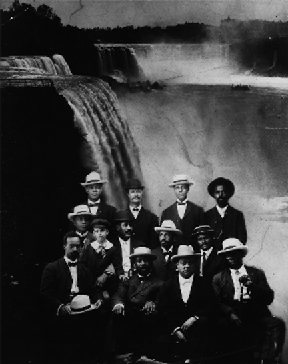 | Women of Niagara movement in 1906- enlarge  |
group picture of Harper's Ferry Niagara movement 1906?() 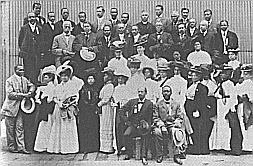 |


No comments:
Post a Comment